If you have also planning to start a...
Read More

A franchise in India lets you run a business under an established brand’s name, systems and supply chain in return for an upfront fee and an ongoing royalty. India’s franchise industry is growing 30–35% a year. To start, fix your budget, shortlist brands, have a lawyer review the agreement, get the site approved, then launch after training.
This guide covers how franchising works, the main franchise and store models, the laws that apply, the 9 steps to start, the risks to plan for, and the sectors worth looking at, including laundry.
Fact | Detail |
|---|---|
Annual growth | 30–35% a year (FranCast Whitepaper 2023-24, Franchise India) |
Projected size | USD 140–150 billion within five years of 2023 (same report) |
Active franchisors | About 4,600 brands across sectors |
Franchise outlets | Nearly 2 lakh |
Share of franchisees investing ₹5–10 lakh | About 40% |
Franchise-specific law | None; governed by general commercial laws |
Disclosure document | Not mandatory in India |
Common models | Single-unit, multi-unit, master, area development, FOFO, FOCO (plus company-owned COCO stores) |
The same report calls India the world’s second-largest franchise market by number of brands.
Want heavy returns on investment?
Get 65% ROI!
A franchise is a contract. The franchisor (the brand) gives the franchisee (you) the right to sell its products or services, or run its business process, under its name, trademark and look.
In return, you usually pay:
Who does what:
Franchisor provides | Franchisee provides |
|---|---|
Brand name and trademark | Investment and working capital |
Proven operating system and SOPs | Day-to-day management |
Training and launch support | Local market knowledge |
Approved suppliers and technology | Staff hiring and customer service |
Marketing and lead generation (varies) | Compliance with brand standards |
For Franchise Queries
Model | What you get | Who it suits |
|---|---|---|
Single-unit | One outlet under the brand | First-time business owners |
Multi-unit | Right to open several outlets in an agreed area | Experienced owners with more capital |
Master franchise | Rights for a state, region or country; can appoint sub-franchisees | Large investors; common for international brands entering India |
Area development | Commitment to open a set number of outlets in a set time | Investors who want to grow fast but not sub-franchise |
FOFO (Franchisee-Owned, Franchisee-Operated) | You invest and run the outlet to brand standards | Owners who want hands-on control |
FOCO (Franchisee-Owned, Company-Operated) | You invest; the brand runs daily operations | Investors who want a passive role |
COCO (Company-Owned, Company-Operated) | Not a franchise: the brand owns and runs the outlet itself | Brands use it for flagship, pilot and benchmark stores |
Most growing brands run a mix: COCO stores to set and test standards, and franchise stores to scale. Most laundry franchises are offered on the FOFO model.
India has no single franchise law. A franchise is governed by several general laws, which is why the agreement itself matters so much.
Law | What it covers in a franchise |
|---|---|
Indian Contract Act, 1872 | The franchise agreement itself: offer, acceptance, consideration and lawful purpose |
Trade Marks Act, 1999 | Licensing of the brand’s trademark; a franchisee can be recorded as a “registered user” under Section 49 |
Competition Act, 2002 | Exclusivity, territory and pricing clauses that may restrict competition; assessed case by case by the Competition Commission of India |
Income Tax Act and GST | Tax on fees, royalties and income; GST applies to franchise fees and royalties; payments abroad may attract withholding tax |
Two points first-time buyers often miss:
You still have a chance to join one of India’s largest & fastest growing franchise.
A franchise lowers risk. It does not remove it.
Risk | What can go wrong | How to protect yourself |
|---|---|---|
Territory | The brand opens another outlet next to yours | Get your exclusive territory defined in the agreement, by area or households |
Contract terms | Renewal and termination clauses favour the brand | Have a lawyer check exit rights, renewal cost and transfer rules |
Market saturation | Too many outlets in the same category locally | Check competitor density within 2–3 km of your site |
Weak support | Promised training or marketing doesn’t arrive | Speak to 3–5 existing franchisees before you commit |
Under-capitalisation | Cash runs out before the outlet stabilises | Keep a working-capital buffer for the ramp-up months |
You can join India’s largest laundry and dry clean chain & get assured profits.
Food and beverage is the largest category, at about 35% of franchise concepts (FranCast). But service businesses with repeat demand and low inventory are growing fast. Here is how the main sectors compare:
Factor | Laundry | Quick food | Education | Diagnostics | Pharmacy |
|---|---|---|---|---|---|
Inventory risk | Very low (consumables only) | High, perishable | Low | Moderate (reagents) | High, expiry-dated |
Specialist licence / skill | None; brand trains you | FSSAI licence, kitchen ops | Faculty and curriculum | Pathologist and clinical registration | Registered pharmacist and drug licence |
Repeat frequency | Weekly to monthly | High but very competitive | Term-based | Occasional | Monthly for regular buyers |
Indicative investment | ₹20–25 lakh + GST (Tumbledry) | Varies widely by format | ₹5–30 lakh | ₹10–50 lakh | ₹12–30 lakh |
Investment ranges above are indicative market estimates and vary by brand, city, format and premises.
You can run a store with in-house processing, or a collection point linked to a processing unit. Customers come back every week or month, and you hold almost no stock.
Quick-service outlets, cafés, bakeries, dessert shops and takeaway counters. Rent, local competition and delivery-platform share decide margins here.
Preschools, tutoring, test prep, computer training and skill centres. Sites near schools and dense residential areas fill seats faster.
Either a sample-collection centre (small space, low equipment) or a full pathology lab (higher upfront cost). Demand rides on routine and preventive health checks.
Works best near housing societies, clinics and hospitals. You must manage expiry dates, storage conditions and drug-licensing rules.
How an organised laundry store compares with a local dhobi:
Factor | Local dhobi | Organised laundry franchise |
|---|---|---|
Process | Manual, varies by person | Standard process and branded chemicals |
Equipment | Basic | Commercial machines |
Order tracking | Paper slip or none | App, SMS and digital billing |
Pickup and delivery | Rare | Standard |
Damage accountability | Informal | Defined policy |
Every business has trade-offs. These are the ones good laundry operators plan for early:
It depends on the sector. Small kiosks start at a few lakh, while large retail formats can cost several crore. About 40% of Indian franchisees invest ₹5–10 lakh (FranCast 2023-24). A Tumbledry laundry franchise costs about ₹20 lakh + GST (single-machine) or ₹25 lakh + GST (double-machine).
Royalty usually ranges from a few percent to around 10% of monthly sales, depending on the sector. Some brands also charge a separate marketing fee. Tumbledry’s royalty is 7.5%.
No. India has no franchise-specific law or mandatory disclosure document. Franchises are governed by the Contract Act, Trade Marks Act, Competition Act, FEMA, the Consumer Protection Act and tax law.
It varies by sector and location. Ask every brand for two numbers: operational break-even (when monthly income covers monthly costs) and full recovery of your investment. Tumbledry stores reach operational break-even in 3 to 5 months; 95% get there by Month 3.
No. Tumbledry trains franchisees and staff through a 15-day certification at its Academy. Its partners include salaried professionals, distributors, teachers, CAs and restaurant owners.
In FOFO, you invest and run the outlet. In FOCO, you invest and the brand runs it. COCO is not a franchise: the brand owns and runs the store itself. Tumbledry runs both COCO and FOFO stores, and franchise partners join on FOFO.
Usually only with the franchisor’s consent. Most agreements restrict transfers, require the buyer to meet the brand’s criteria, and may charge a transfer fee.
Section 27 of the Indian Contract Act generally makes restraints on lawful trade void, but the outcome depends on the clause’s wording. Have a lawyer review it before you sign.
Yes, if you choose the model and brand that fit your capital, time and risk appetite. Key points:
Disclaimer: Figures for Tumbledry are based on average network performance and may vary by location and market conditions. Operational break-even excludes one-time investment, taxes and depreciation. Industry figures are from third-party reports as cited.
Disclaimer: The opinions expressed in this article are those of the author. They do not necessarily purport to reflect the values or views of Tumbledry.
If you have also planning to start a...
Read MoreIf you have also planning to start a...
Read MoreIf you have also planning to start a...
Read MoreIf you have also planning to start a...
Read MoreTier 3 cities in India offer untapped business...
Read MoreThis blog explores ten innovative and emerging small...
Read MoreIf you are not happy with your regular...
Read MoreGo through these best and simple home business...
Read MoreVijayawada which is a prominent city in Andhra...
Read MoreUnderstanding what is ROI and how to calculate...
Read More
Subscribe to us:
Sign up to get more such information & get the best deals on professional cleaning
Shoe material analyzed to decide the cleaning methodology.
The laces, sole, and other removable parts are separated to be cleaned individually.
Any spots or stains are removed with German organic chemicals.
All the bacteria, viruses and bad odor is eliminated.
Shoes are Air Dried, Blow Dried, or Sun Dried depending on the skin type.
Shoe skin is nourished & enriched with our unique natural oil based polish
Once polish is dried, our experts reassemble all shoe parts and pack them for delivery.
Try it once to feel the difference
Carpet Cleaning

An intense, deep-cleaning of carpets to restore their original glory
We specialize in dry cleaning of Persian rugs, silk & Turkish carpets, and all other premium, imported rugs of nylon, wool, cotton, polyester and olefin.
WOOLENS DRY CLEANING

Our Woolmark approved Lagoon system is the world’s most advanced and eco-friendly technology for dry cleaning woolen garments – sweaters, coats, furs, shawls, pashmina, and jackets.
Your woolen garments will be delivered stain free, and will retain their original texture, smoothness, fluffiness, shape & size. Our advanced systems and processes ensure zero shrinkage.
For expensive and delicate woolens like furs & pashmina, we use special eco-friendly chemicals from Germany which are of neutral ph, and form a protective covering around wool fiber to maintain its shine & lustre after dry cleaning.
CURTAIN CLEANING

Premium curtain dry cleaning service service with facility to remove the curtains from rods and install them back after dry cleaning.
Leather Dry Cleaning
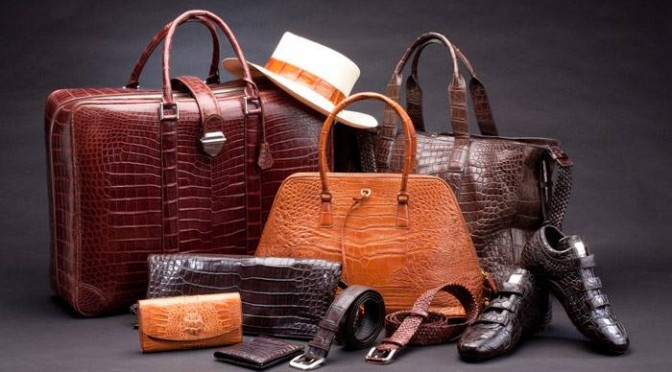
Professional leather dry cleaning for jackets, bags, purses, clutches, wallets, belts, shoes, boots and stilettos.
Protect your leather items from dirt, dust, oil stains, perspiration, dehydration, mold & mildew.
Our expert leather care technicians inspect each item with utmost care to assess the color, shade, and type of leather, and accordingly decide the most appropriate treatment.
Complimentary conditioning and polishing to ensure smooth & shining finish
Shoes/Bag Cleaning & Restoration
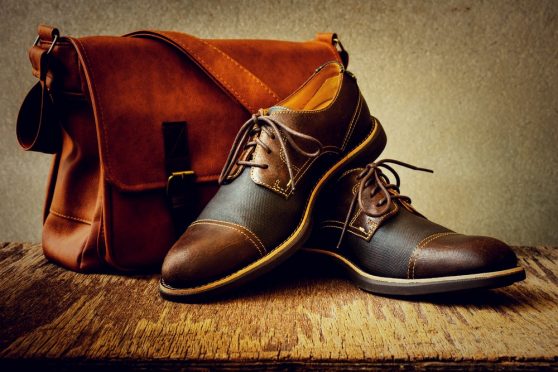
Experts in dry cleaning of Sports, Canvass, Leather, Suede, Nubuck Shoes, Sneakers, Boots, Sandals and Canvass, Jute, Leather & Suede Bags
Following Restoration Services are also available: